Changelog
Tag-based API token limits
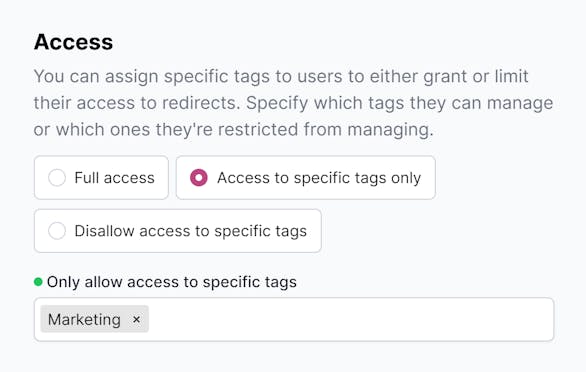
New featureYou can now limit API token access using tags! This means you can create multiple tokens, each with its own specific purpose and access level in your redirect.pizza account. It’s a great way to keep things secure and organized, especially when managing multiple use cases in a single account.
og:image support for frame redirects
New featureAutomatically fetches the destination’s og:image for the frame page. When sharing the source URL on social media, the destination’s og:image is displayed for a seamless integration.
Regex source ordering
ImprovementIf multiple regexes are defined under a single source, multiple regexes can match the incoming URL. We now automatically sort the regexes list under the source based on the number of unique path segments (i.e. number of slashes in the path). We will automatically try to match the regex with the most slashes first, followed by those with fewer slashes.
This helps when defining regexes like test/(.*) and test/(.*)/(.*), where the second regex is more specific, and is commonly the one that we first want to match on.
New filters for the redirect page
ImprovementWe’ve added two new filters on the redirect page, making it easier to locate specific redirects.
Source filter
You can now filter by source, either by specifying the full domain or including the path. This is an exact filter, allowing you to quickly find the precise source you’re looking for.
Examples:
source:redirect.comsource:redirect.com/pathsource:redirect.com/path/
Destination filter
You can now search within the destination URL. This filter returns results that partially match your search query, making it easier to identify redirects by their destination.
Examples:
destination:destination.comdestination:destination.com/path
Real-time destination monitor feedback
BugfixWe’ve resolved an issue with the destination monitor. It now runs immediately after changing the URL and provides instant feedback — no page refresh required.
Frame redirect type page details now updates daily
New featureWhen using the frame redirect type, we automatically fetch the destination's title & favicon information. We now automatically update these details daily for all frame redirects, to ensure the page context is always up-to-date.
New video: redirect.pizza in 1-minute!
New featureWant a fast intro to redirect.pizza? We’ve just released a quick, 1-minute video that gives a clear and concise overview of how redirect.pizza works. Check it out here and discover how easy it is to manage your redirects!
Automatic DNS now supports Dedicated IP upgrades
ImprovementWe’ve expanded our Automatic DNS feature to allow it to be used to upgrade from our Shared IP to your Dedicated IP (if active). This allows a smoother and easier upgrade if many domains are configured with our Shared IP.